Missed the webinar? Here's everything Reagan Nickl covered, plus a bonus workflow you won't want to skip.
AskNicely's Chief Commercial Officer, Reagan Nickl, recently hosted a webinar on one of the most underutilized levers in customer experience: turning bad experiences into actual revenue. The session walked through five (and a bonus sixth) recovery workflows that you can implement to stop churn in its tracks, and start finding new sales in feedback you’re already collecting.
“Your most authentic reviewers aren't your happiest customers, they're your recovered ones.”
Reagan opened with a story. A courier business in Australia delivering and installing furniture on behalf of brands like West Elm and IKEA, received a zero-star survey response just minutes after a driver left a job. The reason: the driver had unknowingly reversed over the customer's mailbox.
Because the feedback triggered an immediate alert through AskNicely, the driver was notified while still a few kilometers down the road. He turned around, apologized face to face, and filed a claim with headquarters. Within the week, the mailbox was replaced. The customer updated their survey to reflect the recovery, and went on to actively recommend the brand.
The principle behind this story drives the entire webinar: companies that turn bad experiences into revenue act on feedback faster than their customers can walk out the door.
Reagan flagged three product features that underpin everything else covered in the session. If you're an AskNicely customer and these aren't active, enabling them is the starting point.
1. Nice(r) AI: A built-in AI companion that knows your survey setup, your responses, and your online reviews. You can ask it to build workflows, surface insights, or flag feedback patterns you might be missing.
2. Review Manager: Brings your Google and Facebook reviews into AskNicely alongside your survey responses, so you're working with a complete picture of customer sentiment, including feedback from customers who never filled out a survey.
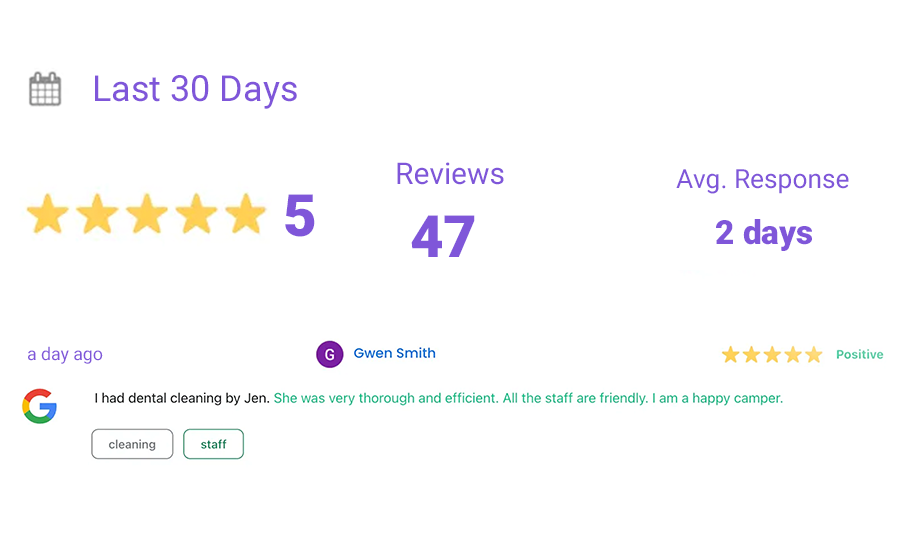
3. Case management: Tracks how quickly your team is following up on feedback and measures response time against an SLA. Research Reagan cited suggests you can prevent churn within the first 24 hours of a poor experience; by 72 hours, most customers have already decided whether they're staying or leaving. Learn more about case management here.
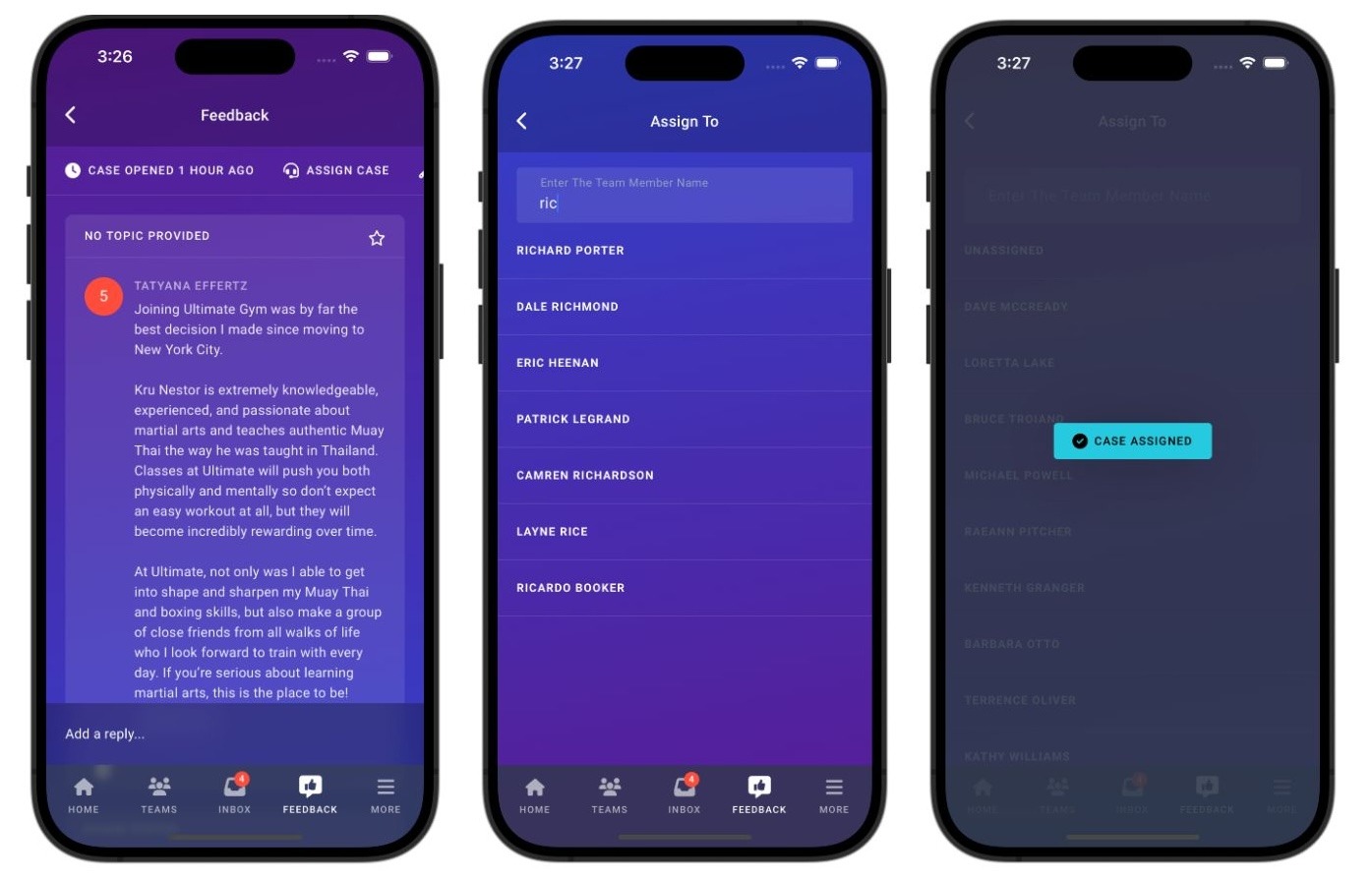
When a customer leaves a low score, two things should happen automatically: a case should open and be assigned to the relevant manager, and a follow-up email should go to the customer.
The email matters more than most businesses realize. Reagan's recommendation: make it short, personal, and empathetic. Skip the templatized "thanks for your feedback, we're always working to improve" language. Something like "I was reading your feedback and wanted to reach out — this isn't the experience we would have intended for you" lands very differently. Include a genuine invitation to make it right.
Delaying the send a little also helps. An instant automated reply signals to the customer that nobody actually read anything.
A low score with no comment gets ignored more often than not. But you still know who left it, and that's an opportunity.
This workflow automatically follows up with customers who left an NPS score below 7 without any explanation, asking them to share more. When they respond, the survey record updates, which then feeds into your other workflows (including the detractor intercept above).
Reagan called this the single highest-priority workflow to turn on, noting it takes about ten seconds to activate in AskNicely and requires no changes to anyone else's day-to-day operations.
Not all detractors should be treated the same. Reagan described a pest control client who knew that if a customer made it through their first year, they were almost certainly a customer for life, meaning a poor experience in month three was worth treating very differently than one in year four.
The recommendation: identify who your high-value customers are (first-year clients, high-spend accounts, whatever is most meaningful to your business), and build a separate workflow path for them with a tighter SLA. When that segment has a poor experience, the response window should be shorter and the escalation path more direct.
Once a detractor issue has been resolved, the recovery survey closes the loop. Rather than asking the customer to retake the full survey, it sends a short follow-up asking how the recovery went. If they give a 10, the original low score is replaced, and they now hit all the promoter-related workflows: review requests, referral prompts, testimonial asks.
This workflow also gives you a measurable leading indicator for your business: how often are you taking detractors and turning them into promoters?
This one started with a client who believed customers were misunderstanding the NPS scale, leaving low scores with positive comments, dragging the overall number down. When Reagan ran the analysis in NiceAI, the problem turned out to be the inverse: promoters and passives were leaving constructive feedback, questions, even cancellation requests, and because their scores didn't trigger any detractor workflows, none of it was being actioned.
The fix is an alert workflow that monitors for keywords (like "cancel"), questions (comment contains "?"), or specific phrases relevant to your business. Combined with NiceAI, you can prompt it to find this feedback on a regular cadence and surface what would otherwise fall through the cracks.
Reagan saved this for last because it represents a genuine mindset shift: using feedback as a sales tool rather than just a retention tool.
The example: a pest control business was receiving detractor feedback from customers complaining about mosquitoes. It turned out mosquito treatment was an add-on not included in their base package. By setting up an alert for the keyword "mosquitoes," the business could proactively reach out and offer the upgrade, turning a complaint into a sale.
Whether you're using AskNicely or another tool, Reagan's starting point is the same: follow up with customers who leave a low score and no explanation. If your platform supports automated workflows, turn that on now. If it doesn't, set up a manual trigger: a daily filter for low-score, no-comment responses that prompts someone on your team to reach out.
From there, work through the list. Audit what you have set up, identify where feedback is falling through the cracks (the hidden constructive feedback workflow is a good place to start – most businesses find more there than they expect), and build toward the recovery survey and high-value escalation paths as your process matures.
If you're using AskNicely, your CSM can run a workflow audit with you and identify exactly where you're leaving value on the table.
Want to see these workflows in action? Book a demo.