In automotive services, customer experience is built (or broken) in moments that matter: booking a service, dropping off keys, approving a quote, waiting for updates, and driving away confident the job was done right. Unlike digital-first industries, these experiences are highly personal, time-sensitive, and trust-driven. Customers aren’t just evaluating the quality of the repair, they’re judging transparency, communication, and how easy the entire process felt.
With rising customer expectations, increasing competition, and online reviews playing a major role in purchase decisions, delivering a consistently great service experience has become a key differentiator for automotive businesses. Retention, repeat servicing, and word-of-mouth referrals all depend on it.
To understand how automotive service organizations are responding, we surveyed service leaders across independent workshops, dealer networks, and multi-location service providers. The research explored how they collect and use customer feedback, measure experience, empower employees, manage online reputation, and connect CX efforts to business growth.
The results show an industry that values customer feedback, but one that’s still finding its traction when it comes to data integration, cross-team alignment, and converting insights into scalable action.
Customer feedback is now a standard part of automotive service operations. Every respondent in our study collects customer feedback in some form, reflecting a strong industry-wide commitment to listening and improving.
While channels may vary by business model, the goal is the same: understand how customers feel about their experience while it’s still fresh and actionable, and be able to do something about it.
Automotive services are inherently multi-touchpoint experiences. Feedback collected only at the end of a visit can miss friction earlier in the journey, such as booking delays, unclear pricing, or lack of service updates. Leading organizations capture feedback across the entire service lifecycle to identify and fix issues before they affect loyalty or reviews.
Measuring customer experience helps automotive businesses move beyond gut feel and anecdotal feedback. Our research shows that service leaders are tracking a healthy mix of operational, emotional, and financial metrics:
Automotive service organizations are increasingly connecting customer sentiment with commercial outcomes. Tracking both experience metrics (CSAT, CES) and loyalty metrics (NPS, retention, CLV) allows leaders to understand not just how customers feel — but how those feelings impact future revenue.
However, with 96% of automotive service businesses tracking CSAT, the industry is clearly focused on immediate service outcomes: Was the repair done well? Was the staff friendly? Did the customer leave satisfied?
CSAT is excellent for identifying frontline execution issues, but on its own, it doesn’t explain future behavior. A customer can be satisfied with a single visit and still defect to a competitor next time due to pricing, convenience, or lack of differentiation.
The fact that NPS lags behind at 70% adoption suggests many organizations are still optimizing for “good service today” rather than long-term advocacy. Automotive businesses that pair CSAT with NPS and retention data gain earlier warning signs of churn, and clearer insight into which locations or teams are creating true loyalty.
When feedback is collected, it matters just as much as what’s collected. Automotive businesses must balance gathering insights with avoiding survey fatigue, especially for repeat customers.
How often surveys are sent:
Average response rates:
Monthly surveys provide trend visibility, but they delay action. In automotive services, where experiences are emotional, urgent, and often stressful, waiting weeks to surface issues can mean lost customers, unresolved complaints, or negative online reviews.
The businesses surveying immediately after service visits are better positioned to:
This gap highlights a clear opportunity: moving from periodic measurement to continuous listening.
Unlike industries where feedback cycles can stretch over weeks, automotive service providers act fast.
How feedback is actioned:
Speed is becoming a defining CX advantage in automotive services. Fast follow-up doesn’t just fix problems, it changes customer perception. A quick call, apology, or clarification can turn a negative experience into a loyalty-building moment.
This also suggests that many organizations already have the intent to act quickly. The next maturity step is consistency, ensuring fast action happens:
Service advisors, technicians, and location managers shape the day-to-day customer experience. Automotive businesses are actively involving employees in feedback programs to improve accountability and consistency:
Automotive leaders recognize that frontline teams drive CX outcomes. Tying feedback to performance and recognition reinforces accountability and customer-first behavior.
However, fewer organizations link feedback to training (42%) or incentives (46%), suggesting feedback is still more reactive than developmental. The biggest gains come when feedback is used not just to evaluate performance, but to coach, upskill, and motivate teams continuously.
Online reviews have a direct impact on booking decisions in automotive services, and most organizations actively manage their digital reputation.
Top reputation strategies:
Automotive businesses understand that reviews are an extension of the service experience. Monitoring platforms, responding to feedback, and amplifying positive reviews are no longer marketing tasks, they’re operational necessities.
Yet only 43% respond promptly to reviews, revealing an execution gap. The businesses that close this gap gain outsized returns in trust, bookings, and differentiation.
Nearly all respondents use customer feedback for decision-making (92%) and align CX strategies with broader business objectives.
How CX supports growth in automotive services:
Key takeaway: Automotive leaders see CX as a growth driver, but fragmentation still slows progress. Businesses that centralize feedback and connect it directly to operational and financial outcomes gain a competitive advantage.
The 2026 automotive CX landscape is clear: customer feedback is no longer optional, it’s foundational. The organizations pulling ahead are those that move beyond collection to real-time action, employee empowerment, and strategic alignment.
Key opportunities:
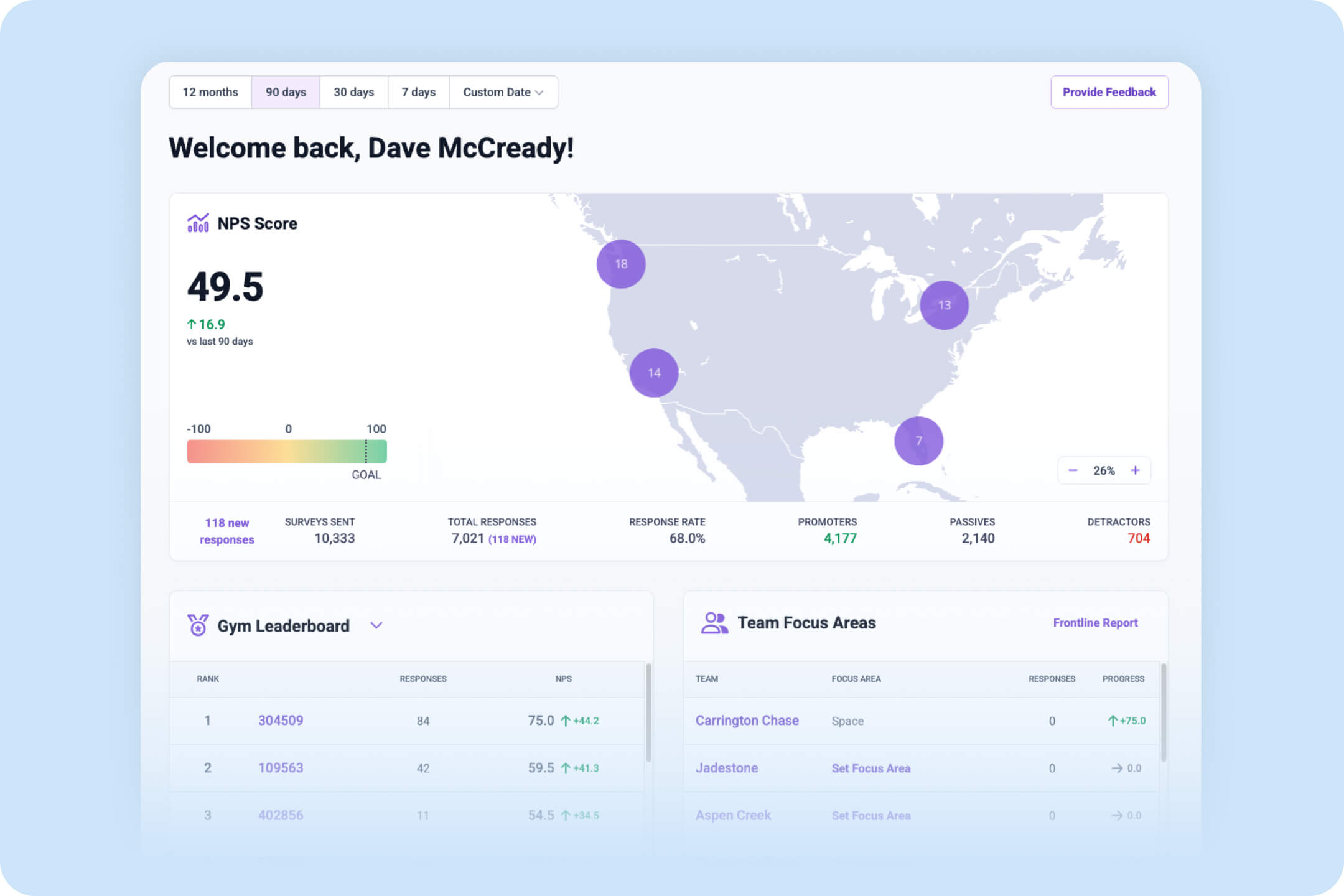
AskNicely helps automotive service businesses collect real-time feedback, empower teams, and turn insights into action, across every location and customer touchpoint.
With AskNicely, you can:
By embedding customer feedback into everyday operations, automotive service providers can build trust, increase repeat visits, and turn satisfied customers into loyal advocates.
Ready to make customer experience your competitive advantage? Learn more here.