A technician pulls into a driveway for a routine quarterly treatment. Before he even gets his sprayer out, he notices the trash cans are still at the curb from pickup day and wheels them back to the garage on his way in. It takes thirty seconds. The homeowner sees it from the kitchen window. That thirty seconds does more for retention than anything printed on the invoice.
This is the kind of detail that shows up in Moxie Pest Control's internal team meetings, where technicians share what District Manager Adam Whitmore calls a "golden moment" – small, unscripted acts of attention that have nothing to do with pest control and everything to do with why a customer stays. Moxie's team has built a habit around noticing these moments because the treatment itself is rarely what determines whether a customer renews.
Pest control runs on a cycle most service businesses would find risky. A lawn care company might interact with a customer weekly. A pool service, monthly. Pest control often means a technician on the property once a quarter, sometimes less. Between visits, it can be hard for the relationship to cross the customer's mind, until a postcard from a competitor shows up, or a spider in the basement makes them wonder whether their current provider is doing anything at all.
Loyalty gets decided in that quiet stretch between visits, long before the next scheduled appointment ever comes up. But how do you build, and retain that loyalty?
Pest control's cycle length is what makes this problem sharper than it looks. Most operators plan their entire customer experience around the technician visit – it's the one guaranteed touchpoint on the calendar, so it's where the training, the scripts, and the feedback surveys all get built. A quarterly cadence means three months can pass between one planned interaction and the next.
Compare that to categories where the service itself carries the relationship. A subscription box shows up every month. A streaming service is used daily. The product does the reminding. Pest control doesn't have that built-in prompt, in fact the whole point of good pest control is that the customer doesn't notice anything happening. No bugs, no smell, no visible proof the treatment is working. Which means the absence of a problem and the absence of a relationship can start to look identical to the person paying the invoice.
Jacob Kosiara, COO of Platinum Pest Solutions, put the risk plainly: before adopting a real-time feedback system, his team found out about problems only when a customer was already trying to leave. "Anytime a customer would want to leave us or cancel services, we were reactive to the issues. And in some cases, we didn't even know the issues were occurring." That's the gap in practice; not a missed appointment, but a slow drift the operator has no visibility into until the cancellation call.
When there's no structured way to hear from a customer between visits, something still fills that space… A neighbor mentions a cheaper quote, a competitor's door hanger lands the same week the customer noticed a single ant in the kitchen, a minor complaint the technician never heard about hardens into a decision the operator only learns about when the account cancels.
Platinum Pest Solutions felt the cost of this directly. In the early weeks of using a real-time feedback tool, the team caught and resolved a service issue with a client that had been heading toward cancellation, a save that, on its own, justified the cost of the platform. Kosiara framed the stakes in terms of exposure, not just individual accounts: for a business serving multiple properties under one client relationship, one unresolved issue can put several accounts at risk at once.
"If we screw up one, we're likely screwing up more. If we do that, we put not only one property at risk, we put multiple properties at risk."
The pattern holds on the positive side too, which is easy to overlook when the focus is all on preventing churn. Left unprompted, a satisfied customer's goodwill mostly just sits there, it doesn't convert into a referral or a review unless someone asks. Platinum's sales team started proactively calling customers who'd given strong feedback, thanking them and asking for a referral. Four new referrals came directly out of those calls. That's goodwill that existed the whole time, just uncollected until someone reached for it. And the good news? This kind of referral building can now be automated with features like Review Request.
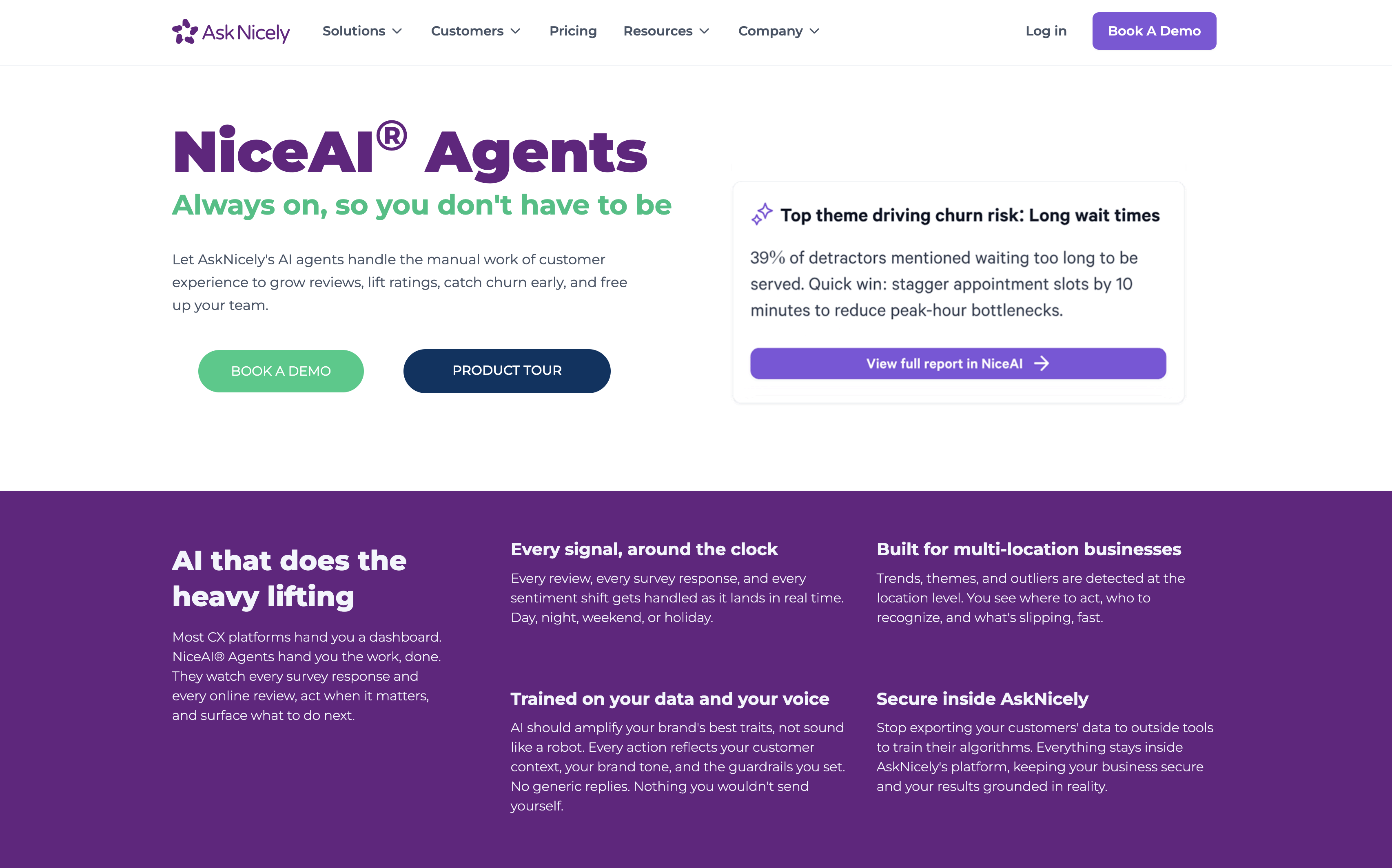
Review Routing Agent takes this a step further. It asks customers for a review at the moment they're most likely to leave one, then sends them to the platform that needs their review most. Once the rules are set, it handles timing and routing continuously
The fix isn't more frequent treatments, most customers don't want a technician on their property any more often than necessary. It's building a rhythm of attention that runs independently of the service calendar, so the relationship stays active even when the truck isn't in the driveway.
Catch the drift before it becomes a cancellation call: Platinum Pest Solutions built exactly this after their early save: instead of waiting for the next scheduled visit to find out how a customer felt, they now route feedback straight to service managers, who trigger a follow-up before the issue has time to compound. It's a small operational shift (a detractor alert instead of a quarterly check-in) but it moves the moment of discovery from the cancellation call to the point where the problem is still fixable.
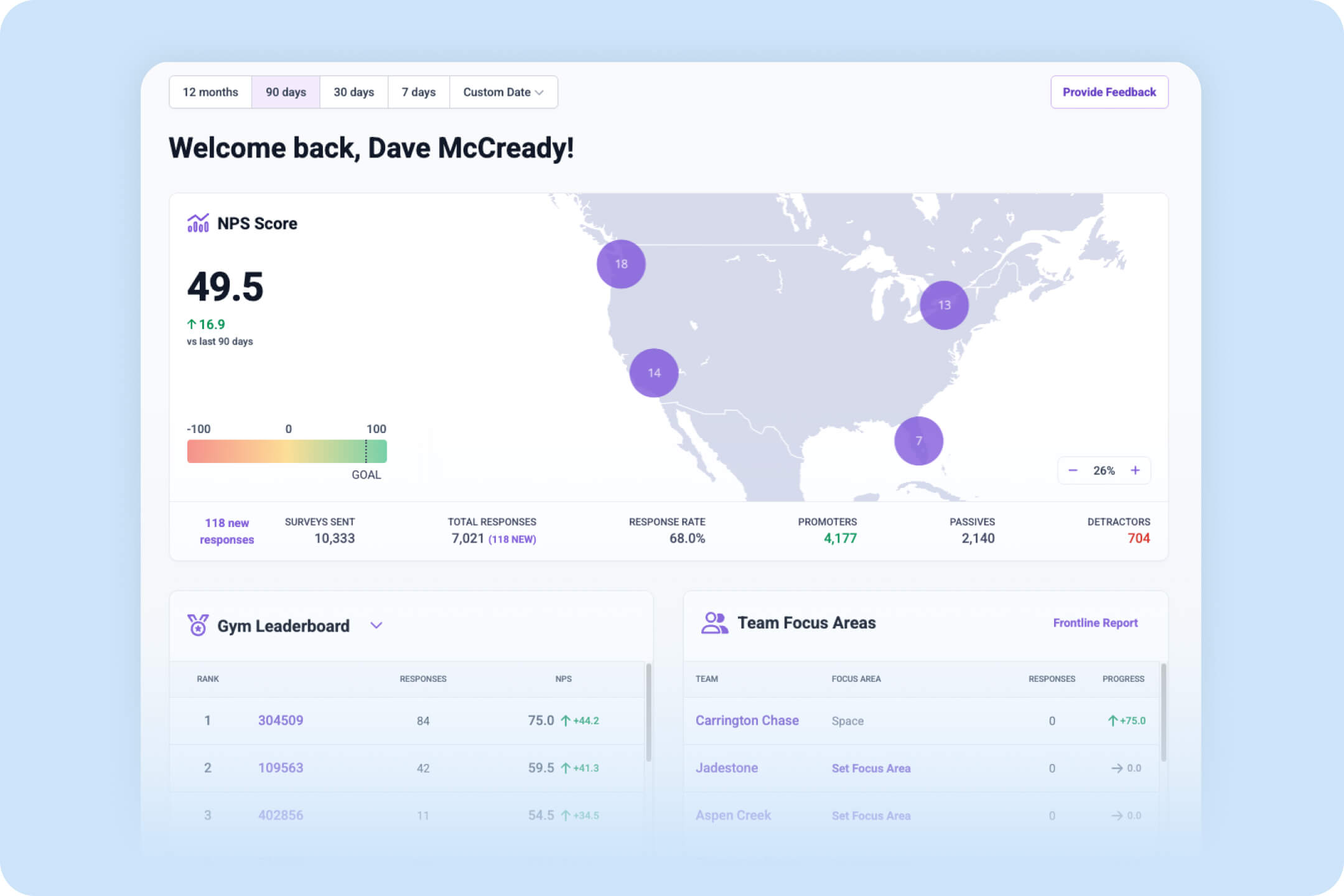
Make attentiveness a daily habit, not a quarterly report: At Moxie Pest Control, technicians track their own CSAT scores and District Manager Adam Whitmore checks branch performance multiple times a day rather than waiting for a monthly rollup. "CSAT doesn't pay the bills, but our customers do, and CSAT is how satisfied they are with us. This is the most direct tool we have," he said. That daily rhythm means feedback shapes training and coaching continuously, instead of arriving too late to act on.
Give the relationship a human face between visits: Moxie's "golden moments" (a technician chatting about a shared sports team, remembering a customer's dog by name) aren't scheduled, but the habit of sharing and celebrating them is. Rylie Peska, Moxie's Director of Marketing and Communications, described discovering just how closely her team tracked this: dropping a real-time CSAT challenge into a Slack channel, she found every technician could name their current score from memory. That's a frontline that experiences the customer relationship as ongoing, not something that starts and ends at the front door.
Build the coaching infrastructure that makes all of this sustainable: None of the above works at scale without a way to get feedback to the people who can act on it. Aptive Environmental restructured their entire frontline coaching model around real-time customer insight, giving regional and local managers the ability to coach specifically to what customers were telling them. The result was a 28-point increase in NPS, a reminder that the tactics above depend on infrastructure, not just good intentions from individual technicians.
“Using AskNicely has transformed how we work with our field service team. We have already seen a dramatic rise in our lowest performers toward our best performers leading to a 28 point NPS increase. The rework cost we are saving alone pays for the tool and we have a lot more we can do now that we have AskNicely.” — Dane Dellenbach, Sr Director of Strategy and Innovation, Aptive Environmental
Pest control will always run on a cycle. That's the nature of the service. Nobody wants a technician showing up weekly for a problem that's already under control. But the cycle only becomes a liability when the silence between visits is left empty. Fill it with the kind of attention Moxie's frontline treats as routine, or the kind of proactive follow-up Platinum built after almost losing an account, and the gap stops being a churn risk. It becomes the place where the relationship actually gets built.
Platinum Pest Solutions is already planning the next stage of this: automating post-service surveys to trigger immediately after each visit, then routing detractors for follow-up without waiting on a manager to spot the issue manually. It's a small technical step, but it points at the bigger shift, treating the space between treatments as an active part of the customer relationship, not a gap to wait out until the next scheduled stop.
The operators who figure this out won't just retain more customers through slower seasons. They'll be the ones customers think of first when a competitor's door hanger shows up because the relationship never actually went quiet.
The tactics above only work if there's a system underneath them: something that catches feedback the moment it happens, gets it to the right person automatically, and gives frontline teams a way to see how they're doing without waiting for a monthly report. That's the infrastructure Platinum, Moxie, and Aptive all built using AskNicely.
Automated surveys triggered off the service calendar (not just a single post-visit ping) keep a pulse on the customer through the whole cycle, not just the moment the technician leaves. When a response signals trouble, detractor routing gets it in front of a service manager immediately, the same mechanism that lets Platinum catch and save an account before it reaches a cancellation call. On the frontline side, real-time dashboards and coaching tools give technicians and managers the kind of daily visibility Moxie's team runs on, turning feedback into training before problems repeat.
For multi-location operators, that consistency compounds. Every branch, every technician, every treatment cycle feeds the same feedback loop, so the relationship stays active company-wide, not just wherever one manager happens to be paying close attention.
Want to see how AskNicely can help you build loyalty between every visit? Book a demo and find out what a continuous feedback rhythm could do for your retention numbers.