Advances in AI, automation, and rising customer expectations are reshaping how people interact with brands, and companies that fail to keep up risk falling behind. In 2026, delivering great experiences isn’t a matter of luck or guesswork; it’s the result of continuous learning, real-time feedback, and empowered teams that turn insights into daily improvements.
Customer experience (CX) innovation has become both a competitive advantage and a survival strategy. Businesses that invest in smarter processes, connected systems, and employee empowerment are not just meeting expectations, they’re exceeding them in ways that drive loyalty, growth, and differentiation.
So let’s break down what CX innovation really means, explore the building blocks that make it possible, and share actionable strategies and examples you can apply today. You’ll discover how to harness technology, insights, and cultural change to create customer experiences that delight and keep customers coming back.
Customer experience innovation is the practice of developing new (or improving existing) ways to create value at every stage of the customer journey. It’s not just about adopting the latest technology or running a one-off pilot; true CX innovation is a continuous cycle of learning, experimentation, and improvement that puts the customer at the center of every decision.
Every interaction a customer has with your brand, online or offline, big or small, offers an opportunity to innovate. This includes touchpoints such as:
To stay competitive, brands must embrace continuous high-quality improvements across all these touchpoints. Regularly collecting and analyzing customer feedback not only identifies pain points but also uncovers opportunities to delight customers in new ways. CX innovation is most effective when insights are acted upon quickly, enabling brands to refine the journey, experiment boldly, and consistently elevate the customer experience.
Customer expectations have shifted dramatically over the last three to five years. Speed, personalization, and consistency now define brand loyalty, and generative AI has accelerated this evolution by redefining what “great service” looks like. For many organizations, keeping up with these demands requires bold innovation across people, processes, and technology.
Here are the key market forces and business drivers shaping CX innovation in 2026 and beyond.
AI, automation, and advanced analytics are constantly expanding what’s possible in customer experience. Traditional, centralized CX models often struggle to respond quickly to these changes, leaving brands at risk of falling behind. Real-time feedback tools, adaptive systems, and AI-powered insights (like those offered by AskNicely’s NiceAI) are critical for staying current, empowering teams to act swiftly and meaningfully on customer data.
Growth increasingly stems from earned loyalty rather than marketing spend. We call this concept earned growth: repeat visits, referrals, and strong brand reputation all result from exceptional customer experiences. CX innovation drives this growth by simultaneously improving operational efficiency and fostering customer advocacy. In fact, 81% of businesses today compete primarily on customer experience (Digital Experience).
Customers are less tolerant of poor experiences, and even one bad interaction can drive them away. Meeting and exceeding customer expectations is crucial for retaining customers and fostering positive, long-standing relationships.
In the U.S., 59% of consumers will walk away after several negative experiences, and 17% leave after just one (PwC). Expectations now extend beyond service speed and friendliness: customers demand seamless, omnichannel experiences that feel effortless across every touchpoint.
Great customer experiences aren’t built by accident; they’re the result of foundational enablers that make improvement possible every day. These drivers are both technological and cultural, and when combined, they create the conditions for continuous innovation.
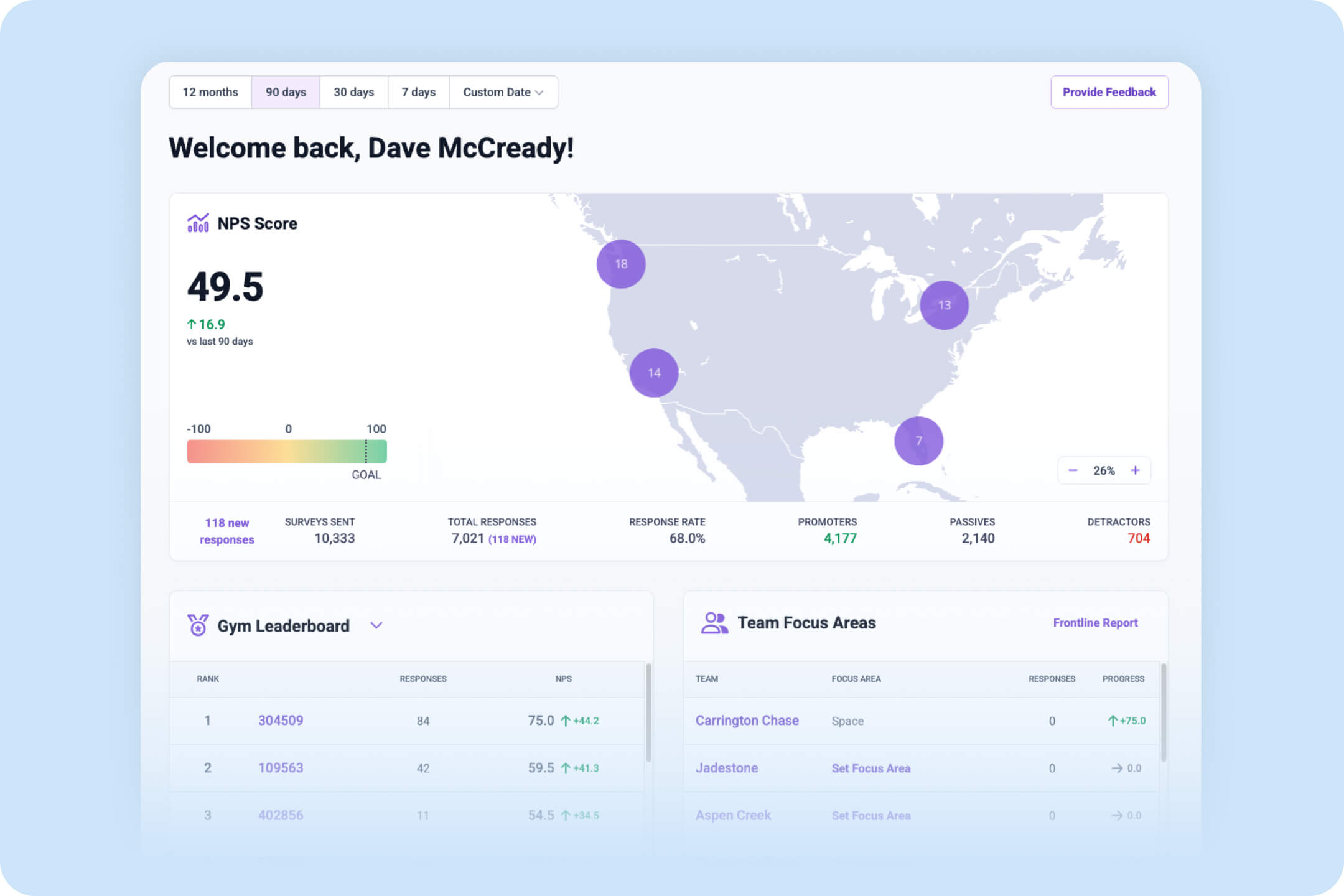
Modern CX innovation starts with listening continuously. Collecting real-time feedback allows teams to identify issues and opportunities the moment they arise. Platforms like AskNicely enable real-time survey triggers and feedback routing, shortening the loop between customer input and meaningful action, so improvements happen faster and more effectively.
Meaningful innovation happens through the people serving customers every day. Empowering frontline teams to act on insights leads to faster problem-solving, higher morale, and more personalized service. AskNicely’s scorecards, coaching tools, and feedback dashboards help turn insights into motivation, giving employees the confidence and context to improve experiences on the spot.
AI and automation accelerate the journey from feedback to action. They identify patterns, summarize insights, and handle routine tasks that once slowed teams down, freeing people to focus on empathy, creativity, and service excellence. Tools like AskNicely’s NiceAI exemplify this shift, helping organizations translate data into actionable insights instantly.
CX innovation requires visibility across all touchpoints, online, over the phone, and in-person. Integrating CX, CRM, and support systems aligns teams around a single view of the customer, breaking down silos and enabling coordinated action. AskNicely’s integrations make it easy to connect data across platforms, ensuring insights are accurate, accessible, and actionable.
Even the best tools and teams can falter without leadership support. When executives prioritize customer experience, it becomes a shared organizational focus rather than a side project. Aligning incentives and goals around CX outcomes ensures that innovation translates into measurable business impact, turning customer insights into CX strategy, revenue growth, and loyalty.
For service businesses ready to innovate consistently, the key is identifying strategies that match your current maturity stage. CX innovation isn’t one-size-fits-all—some tactics work best for organizations just starting their journey, while others benefit more mature programs. Here are several actionable strategies that can drive meaningful improvements today:
Move beyond reactive service by leveraging customer data and AI to anticipate needs and tailor customer interactions. Multi-location service businesses, like fitness chains or dental practices, use past visit data to send timely reminders or personalized offers. Hospitality brands adapt room preferences based on previous stays to create seamless, individualized experiences. Dynamic survey tools can adjust in real time based on customer context, surfacing more relevant feedback and helping teams predict sentiment trends before issues escalate.
Structured, real-time feedback loops uncover opportunities for process and service innovation. Hospitality chains refine check-in processes based on recurring survey insights, while home service companies adjust scheduling workflows after identifying pain points in customer feedback. AI-powered analytics convert incoming feedback into actionable themes, enabling teams to implement improvements faster and make decisions rooted in data rather than guesswork.
Move beyond transactional interactions and create community-based ecosystems where customers actively shape their experience. Just as Lululemon hosts in-store events and Peloton fosters digital communities to build belonging, service businesses—like dental practices, salons, or veterinary clinics—can deepen loyalty by hosting appreciation events, creating patient or client groups, or encouraging ongoing conversations. These experiences strengthen customer engagement, reinforce trust, and drive repeat business, showing that loyalty extends far beyond the product or service itself.
Give each branch or team the autonomy and insights to experiment locally, making innovation distributed rather than centralized. Retail and service brands that pilot local improvements — such as greeting scripts, service workflows, or store layout tweaks — see higher NPS when changes originate from the front line. Location-level dashboards and scorecards allow teams to measure impact locally and replicate successful innovations across the network.
CX innovation isn’t just about removing friction, it’s about creating memorable moments that build emotional connection. First, ensure the fundamentals (consistency, reliability, responsiveness) are in place. A veterinary clinic sending a handwritten note after a pet’s first visit, or a home services company leaving a small thank-you gift, can create an outsized emotional impact. Advanced feedback analytics can identify the emotional drivers in customer responses (gratitude, frustration, delight) so teams can design experiences that resonate deeply and leave lasting impressions.
Tracking the success of CX innovation requires more than just monitoring NPS scores. True measurement follows the full chain from insight to action to business impact. By connecting feedback, operational improvements, and outcomes, organizations can see which innovations are driving loyalty, growth, and customer satisfaction.
Align your CX innovation goals with measurable business results. Key metrics might include improvements in retention rates, revenue from repeat customers, referral growth, and trends in overall customer satisfaction and loyalty. Benchmarking progress across locations and teams ensures consistency and helps identify where innovation efforts are most effective. Real-time feedback tools make it easy to track these outcomes and adjust targets as you learn.
Customer experience and employee engagement are deeply interconnected. Pair CX metrics, such as NPS, CSAT, and online review scores, with employee engagement data to understand the cause-and-effect relationship. High-performing teams often translate insights into better service, highlighting how employee involvement drives meaningful customer experiences.
Measurement isn’t just about reporting, it should fuel action. Use analytics to identify trends, surface pain points, and prioritize changes that make a tangible impact. Dashboards, AI-driven insights, and digests allow teams to see patterns in real time, enabling faster iterations and ensuring that learning translates into improved customer experiences continuously.
AskNicely brings together the core enablers of CX innovation — real-time feedback, empowered teams, recognition, and AI-driven insights — into a single platform that helps organizations of all sizes innovate consistently and at scale.
Capture actionable insights at the exact moments that matter. Surveys can be triggered via email, SMS, or web, giving teams instant visibility into the customer experience and enabling rapid action.
Turn raw feedback into clear, actionable intelligence. NiceAI automatically detects themes, summarizes sentiment, and surfaces opportunities for improvement, helping teams identify the highest-impact actions without getting lost in data.
Deliver more relevant and personalized feedback by adapting questions in real time based on customer responses, location, or focus area. This ensures that each survey captures the insights that matter most for driving improvement.
Translate feedback into action by setting local, data-driven goals and recognizing teams that deliver outstanding experiences. Celebrate wins automatically to reinforce behaviors that drive continuous innovation and build lasting customer loyalty.
Connect seamlessly with CRMs, help desks, and messaging tools, so insights flow naturally through existing workflows and teams can act on feedback without friction.
Ready to see how AskNicely can help your business innovate and elevate the customer experience? Book a demo today.
AI enables organizations to analyze vast amounts of customer feedback quickly, detect recurring themes, predict trends, and even anticipate customer needs before issues arise. By automating routine analysis and surfacing actionable insights, AI frees teams to focus on designing memorable experiences and personalized interactions. For example, predictive analytics can flag service bottlenecks or highlight customers at risk of churn, allowing brands to intervene proactively.
The most effective tools combine real-time feedback collection, analytics, and team engagement. Platforms that provide location-level dashboards, dynamic surveys, and AI-powered insights allow distributed teams to act locally while aligning with broader organizational goals. Integrations with CRMs, help desks, and messaging platforms ensure insights flow seamlessly through existing workflows, making it easier for all team members to participate in innovation.
Measuring ROI requires connecting feedback to tangible business outcomes. Key metrics include retention rates, repeat purchase revenue, referral growth, customer satisfaction trends, and employee engagement. Organizations that continuously collect and act on feedback often see measurable improvements in NPS, CSAT, and operational efficiency. According to McKinsey, companies that excel in CX grow revenue 10–15% faster than competitors.
Digital transformation focuses on adopting technology to improve operations and workflows, often at a structural or systemic level. CX innovation, in contrast, is specifically about creating new ways to enhance the customer journey and experience. While digital transformation may enable CX improvements, innovation requires ongoing experimentation, feedback, and cultural change to continuously meet evolving customer expectations.
Frontline employees interact directly with customers and are often the first to notice friction points or opportunities to delight. Empowering these teams to act on insights fosters faster problem-solving, local experimentation, and higher morale. Their input, combined with real-time feedback and analytics, ensures innovations are grounded in real customer experiences rather than assumptions. This ultimately fuels a customer-centric culture, where decision-making on CX initiatives occurs from the ground up.
AskNicely integrates real-time feedback, machine learning and AI-powered insights, dynamic surveys, and team recognition into a single platform designed to drive continuous improvement. Unlike platforms that focus solely on measurement, AskNicely emphasizes actionability: turning feedback into prioritized streamline improvements, enabling local experimentation, and celebrating wins that reinforce positive behaviors—helping organizations innovate and achieve business success at scale.