Property management has always been a people business.
Behind every lease renewal, maintenance request, inspection, or owner update is a customer whose perception of your service is being shaped in real time. Yet many property management businesses still rely on operational metrics alone to measure success. Occupancy rates, portfolio growth, arrears, and lease renewals are all important indicators, but they only tell part of the story.
The challenge is that these metrics reveal what happened, not why it happened.
A landlord may renew because they have limited alternatives. A tenant may stay despite being frustrated with the service they've received. Likewise, a customer who leaves a negative review or switches agencies often gives plenty of warning signs long before they reach that point. The problem is that most businesses never see those signals.
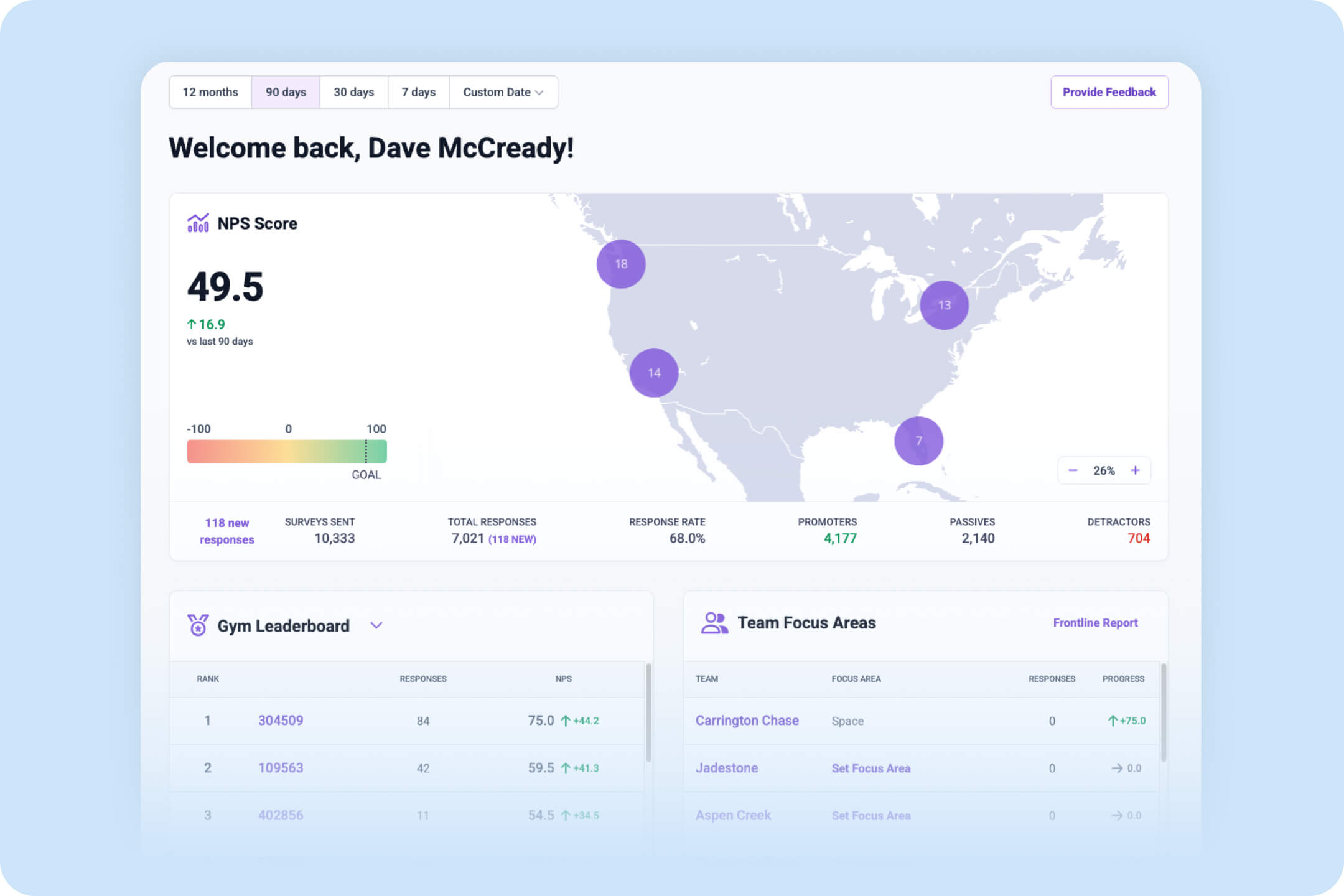
That's why leading property management companies are shifting their focus from simply managing properties to actively managing customer experiences. They're collecting feedback throughout the customer journey, uncovering issues before they escalate, and using real-time insights to improve both customer and employee experiences.
At its core, great customer experience in property management is about understanding how customers feel at every stage of the relationship and using those insights to continuously improve.
So what does great customer experience actually look like in property management? Let's explore the key characteristics of agencies that consistently build loyalty, trust, and long-term growth.
You can't improve experiences you can't see.
One of the biggest challenges in property management is that customer dissatisfaction often remains hidden until it's too late. A tenant may be frustrated by slow communication or a landlord may feel uninformed about what's happening with their investment. Yet neither may raise their concerns directly until those frustrations have accumulated into a complaint, a negative review, or a decision to leave.
This leaves many property management businesses operating with a significant blind spot. While they can track metrics like lease renewals, rent collection, maintenance completion rates, and portfolio growth, they often have limited visibility into how customers actually feel about the service they're receiving.
The result is a reactive approach to customer experience. Teams spend their time responding to issues after they've escalated rather than identifying and addressing them early.
The most successful property management businesses take a different approach. They create systems that capture customer sentiment continuously, giving teams the ability to identify trends, uncover friction points, and take action before problems become bigger issues.
This was a challenge that McGrath Estate Agents recognized across its national property management network.
Before implementing AskNicely, customer feedback was often collected reactively. Complaints would surface through channels like Google Reviews or Facebook, making it difficult to identify recurring issues across offices or understand customer sentiment at scale.
Without a consistent way to measure customer experience, teams were left relying on business outcomes alone.
"As a Head of Property Management, I've always been a big believer that if you don't have an NPS of any form in your business and you don't understand what your customer sentiment is, then you're really missing the point on CX," says Jess Alvial, Head of Franchise Property Management at McGrath.
That insight highlights an important shift happening across the industry. Great customer experience doesn't start with solving problems. It starts with understanding where they exist in the first place.
For property owners and tenants, the customer experience is built over months and years through dozens of touchpoints. From onboarding and routine inspections to maintenance requests and lease renewals, every interaction contributes to how customers perceive your agency.
That's why great property management businesses don't rely on a single measure of customer satisfaction. Instead, they look at both the overall health of the customer relationship and the quality of individual interactions along the journey.
Net promoter score (NPS) provides a view of long-term customer loyalty and sentiment. It helps answer questions like: How likely is this customer to stay with us? Would they recommend our agency to others? And why?
Check out our free NPS survey template here.
Customer Satisfaction (CSAT) surveys, on the other hand, provide insight into specific experiences. They help identify whether a maintenance request was handled well, whether communication met expectations, or whether a recent interaction created frustration.
Check out our free CSAT survey template here.
Together, these measures provide a much more complete picture of customer experience. Rather than simply knowing whether a customer is happy or unhappy, businesses can understand where and why those feelings are being formed.
McGrath adopted this approach by using NPS surveys to measure overall relationship health while deploying CSAT surveys at key stages of the customer journey.
By integrating AskNicely with PropertyMe, feedback collection became embedded within day-to-day operations rather than existing as a separate process. This allowed the team to gather real-time insights at meaningful moments and quickly identify areas requiring attention.
Instead of making assumptions about what customers wanted, McGrath could pinpoint specific friction points and make improvements based on direct customer input. Leaders gained greater visibility across their network, while local teams received the information they needed to improve the experiences they delivered every day.
When businesses understand both the overall relationship and the individual moments that shape it, they can move beyond guesswork and start making customer experience decisions with confidence.
Many businesses treat customer feedback as a service recovery tool. A complaint comes in, someone makes a phone call, the issue is resolved, and everyone moves on. While this approach can help salvage individual relationships, it rarely leads to meaningful improvements in the overall customer experience.
Great customer experience requires a different mindset. Rather than focusing solely on resolving individual issues, leading property management businesses use feedback to identify patterns, uncover operational weaknesses, and drive continuous improvement across the organization. They’re also using AI agents to help to uncover churn risks, eliminate manual processes and empower teams to act on feedback effectively.

As Jess Alvial explains, simply reassuring a customer isn't enough if the underlying problem remains unresolved.
"It's not just a matter of calling somebody and trying to smooth over a problem. If you're not digging deeper and actually looking at the core issues and fixing them within the business, you're only going to be making one call, telling a customer that it's going to be okay, reassuring them, and then a couple of months down the track, there's going to be another problem with their account."
This distinction is what separates reactive customer service from proactive customer experience management.
McGrath saw this firsthand when customer feedback highlighted recurring accounting errors on monthly statements. The survey response revealed more than a single unhappy customer, it exposed a process issue that needed attention.
Armed with that insight, the team was able to investigate the root cause, improve the underlying process, and strengthen the customer relationship at the same time.
This is where customer feedback becomes truly valuable. It moves beyond measuring satisfaction and becomes a catalyst for operational improvement.
The best property management businesses don't wait for complaints to appear on review sites or social media. They create feedback loops that help them spot issues early, understand what's driving customer sentiment, and make improvements that benefit every customer, not just the one who raised the concern.
Customer experience is often framed as something that happens to customers. But in practice, it’s just as much about the people delivering the service.
In property management, frontline teams are constantly balancing competing demands: urgent maintenance requests, tenant communication, landlord expectations, and operational deadlines. Without clear feedback loops, it can be difficult for teams to understand what “good” looks like from the customer’s perspective, or to see the impact of their work when things go well.
That’s where structured customer feedback becomes a source of clarity, recognition, and coaching.
Instead of only surfacing when something goes wrong, feedback can highlight what’s working well. It can reinforce positive behaviours, celebrate strong performance, and give teams real examples of great service in action.
This shift changes how customer experience is perceived internally. It moves from something that feels punitive or reactive to something that is constructive and motivating.
Jess Alvial describes this change clearly in McGrath’s experience:
“The spin on everything has gone from making customer feedback scary to it actually being empowering and uplifting. Then, tying the recognition piece into it as well has got some really positive impacts.”
At McGrath, customer feedback didn’t just sit with leadership. It flowed back into teams, helping property managers and support staff see the direct impact of their work. Positive feedback became a way to recognise great performance, while constructive feedback became an opportunity to coach and improve.
This also helped strengthen alignment between customer experience and employee experience. When teams can see how their actions influence customer sentiment in real time, they are more engaged, more accountable, and more motivated to improve outcomes.
Over time, this creates a reinforcing loop: better visibility leads to better behaviour, better behaviour leads to better customer outcomes, and better outcomes reinforce team confidence and performance.
In property management, where teams are already managing high volumes of communication and operational work, feedback systems need to be simple, automated, and embedded into existing workflows. If collecting customer insight creates additional admin or relies on inconsistent human follow-up, it quickly becomes fragmented or underused.
The most effective CX programs remove that friction entirely.
Instead of treating feedback as a separate activity, leading agencies integrate it directly into the systems they already use every day. This allows customer sentiment to be captured automatically at key moments in the journey, without adding extra steps for frontline teams.
At McGrath Estate Agents, this approach became a turning point.
By integrating AskNicely with PropertyMe, customer feedback was automatically triggered based on real interactions within the property management workflow. This meant surveys could be sent at the right moments, without requiring manual intervention from staff or disrupting day-to-day operations.
The impact was immediate. Feedback collection became consistent across the network, leadership gained real-time visibility into customer sentiment, and teams were no longer burdened with manually chasing responses or managing fragmented data sources.
As Jess Alvial notes, the integration created both efficiency and confidence:
“Having the integration with PropertyMe, having that availability has been amazing in terms of time saving as well and lowering risk because it's all automated at the end of the day.”
Beyond time savings, automation also improved the quality of insight. With structured, always-on feedback flowing in, McGrath could identify trends earlier, respond faster to issues, and ensure no customer experience signals were missed.
Technology, in this context, is all about enabling consistency at scale. For national property management networks in particular, it ensures that every office, team, and customer benefits from the same level of visibility and responsiveness.
Customer experience is often discussed in terms of service quality or customer satisfaction, but its impact extends far beyond that. In property management, experience directly influences the outcomes that matter most to the business: retention, reputation, referrals, and long-term growth.
When customers feel heard, supported, and valued throughout their journey, they are more likely to stay, more likely to recommend your services, and more likely to leave positive reviews that strengthen your market presence.
In contrast, even small points of friction, if left unaddressed, can compound over time and show up in the metrics that matter most, often too late to recover the relationship.
Great property management businesses understand this connection and actively design their customer experience programs to support growth outcomes, not just satisfaction scores.
At McGrath Estate Agents, this connection became especially clear through the way feedback was used to generate reviews and strengthen social proof.
By using AskNicely’s Review Request capability, McGrath was able to turn positive customer feedback into public reviews at scale. Instead of hoping satisfied customers would take the time to leave a review, the process became a natural extension of the feedback loop.
This helped increase visibility in local markets and reinforced the strength of individual offices across the national franchise network. Positive customer experiences became part of McGrath’s public reputation.
At the same time, this feedback loop created a broader growth flywheel. Better experiences led to more positive feedback, which led to more reviews, which strengthened brand reputation and ultimately supported new business growth and portfolio expansion.
Importantly, this wasn’t just about marketing outcomes. It also reinforced internal alignment. Teams could see the direct connection between the service they delivered, the feedback they received, and the business impact that followed.
Property management has traditionally been measured through efficiency metrics: occupancy rates, turnaround times, maintenance response speed. Those numbers still matter, but they don't explain why residents renew, refer friends, or leave scathing reviews.
The agencies leading the way today are building something more complete. They’re combining operational discipline with continuous customer insight, using real-time feedback to understand sentiment, improve processes, and strengthen relationships at every stage of the journey.
Great customer experience in property management is defined by visibility, consistency, and action. It’s the ability to see how customers feel in real time, understand what’s driving those feelings, and respond in a way that improves both the customer and employee experience.
McGrath Estate Agents’ experience shows what this looks like in practice. By integrating AskNicely with PropertyMe, they moved from reactive feedback to a structured, real-time system that:
As Jess Alvial puts it:
“We can implement all of the processes and systems in the world and create efficiency around what we do. But if you have no idea what your customer is thinking, at any point in time, there is zero point to having all of those things in play.”
That’s the shift happening across modern property management. Efficiency alone is no longer enough. The businesses that will outperform are those that can consistently understand and act on customer sentiment in real time.
Let us show you how thousands of services businesses simplify customer experience management.